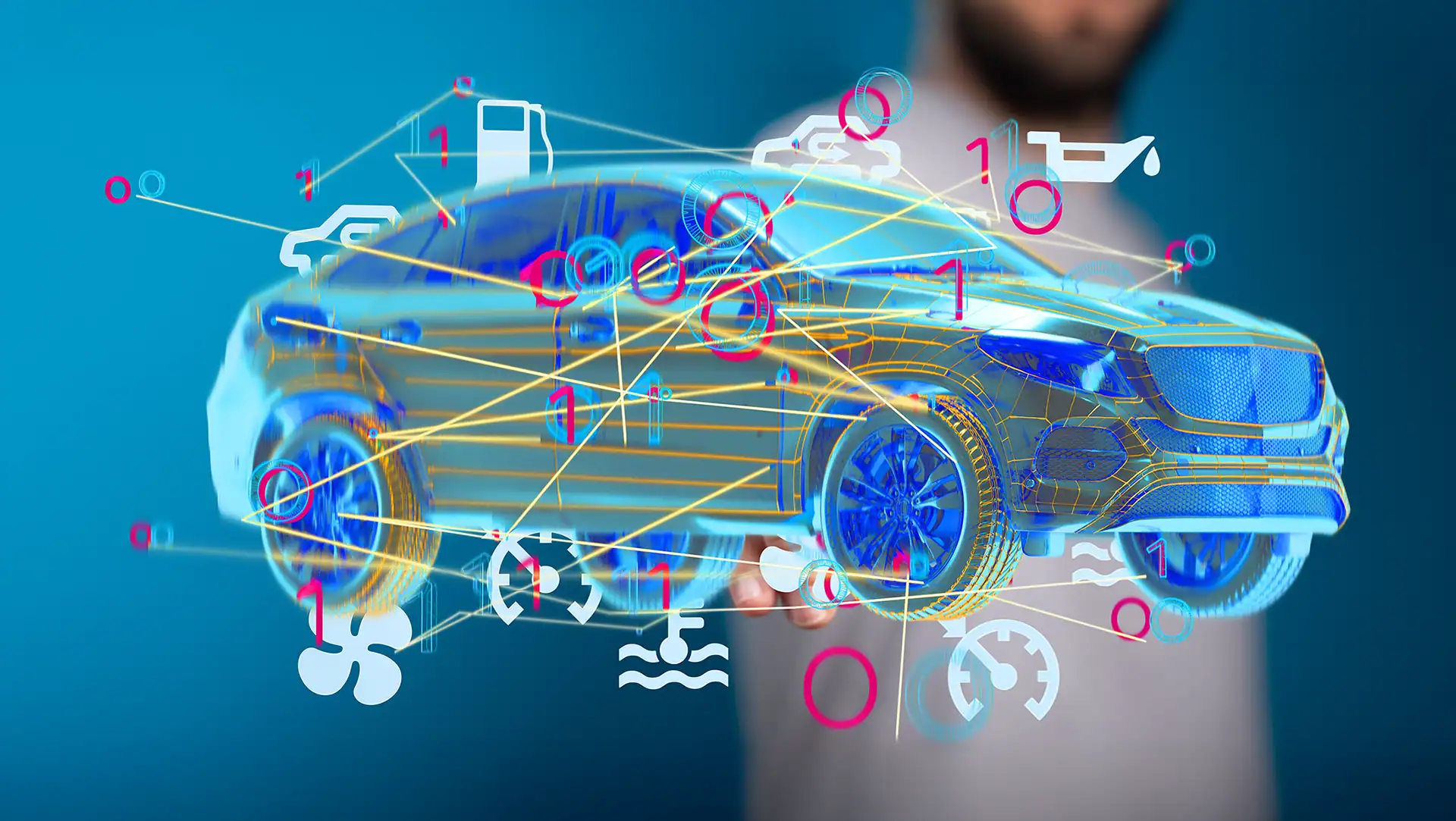
As cars become software-powered platforms, digital twins and AI are transforming how vehicles are designed, built, and validated.
Vehicles are transitioning from mechanical assemblies to software-powered platforms, where innovation is driven by code, connectivity, and digital simulation. This shift toward software-defined vehicles is transforming design, manufacturing, and user experience, creating both opportunities and challenges for the industry. Pramod Nanjundaswamy, VP Head Delivery in Technical Direction in India, shares his perspective on the challenges, opportunities, and technological breakthroughs shaping the future of mobility.
“The most exciting aspect of this transformation is witnessing the entire automotive ecosystem: R&D partners, Tier-1s, and OEMs, collaborating to make software-defined vehicles a reality.”
How do you see the automotive industry adapting to software-defined vehicles?
The transition from hardware-centric to software-driven vehicles is one of the most significant changes our industry has ever faced. Traditional automotive companies, rooted in mechanical engineering, are now embracing a technology-first mindset. The challenge lies in evolving legacy architectures into modern, zonal-based platforms, where software controls vehicle functions centrally rather than through distributed hardware.
For example, validating millions of lines of code, ensuring compliance with automotive standards, and maintaining financial discipline are critical steps. Investments in software may not always be as visible as physical components, which can create uncertainty. However, the solution is to demonstrate progress incrementally while keeping the end goal in focus.
At ALTEN, we support this transition by providing technology accelerators such as pre-validated building blocks that help customers reduce development time and improve productivity. Our multi-industry expertise allows us to integrate software, hardware, and connectivity solutions seamlessly, ensuring our customers stay ahead in this rapidly evolving landscape.
What role do digital twins and AI play in accelerating automotive innovation?
Digital twins are transforming how we design, test, and optimize vehicles. By creating virtual replicas of factories, cars, or individual systems, we can simulate performance, efficiency, and safety in a controlled environment. This approach allows us to test everything from power and mileage to manufacturing workflows before any physical production begins.
Everything starts in the virtual world. We can identify issues, refine designs, and innovate without the risk of physical errors. This not only reduces costs but also accelerates the entire development process.
A recent project involved transforming a traditional factory in India into an IoT-enabled, data-driven facility. We retrofitted old production lines with sensors, connected them to a digital twin platform, and trained teams to use real-time data for quality and productivity improvements. The biggest challenge wasn’t the technology itself but changing the mindset of teams accustomed to physical processes. Once they saw the benefits, such as improved efficiency and reduced downtime, adoption became natural.
Generative AI is also making an impact, though digital twins remain the foundation. AI helps analyzing simulation data, optimizing designs, and predicting maintenance needs, all while ensuring human oversight for quality and compliance.
How does ALTEN help customers overcome the human and technological barriers to digitalization?
The greatest obstacle to digital transformation isn’t the technology but the cultural shift. Many organizations struggle to move from a “seeing is believing” mentality to trusting virtual processes. At ALTEN, we address this by guiding customers through each step of the journey, demonstrating tangible results along the way.
We bring customers into the process. Whether through proof-of-concepts, centers of excellence, or cross-industry insights, we show how digital tools deliver real-world value.
Our centers of excellence in automotive, semiconductor, and AI provide scalable skill sets and technology roadmaps tailored to industry trends. This ensures our customers not only adopt new technologies but also build the internal expertise to sustain them. Our global experience allows us to bring best practices from aerospace, telecommunications, and other sectors into automotive, fostering innovation and resilience.
What does the future hold for software-defined mobility?
The next frontier is full-vehicle digital twins, where every subsystem from chassis to cockpit is simulated and validated virtually before physical production. This was unimaginable just five years ago. Today, we’re mixing and matching building blocks in a simulated world, ensuring everything works seamlessly before it hits the road.
As vehicles become more connected, the focus will shift to system-level thinking integrating AI, IoT, and human expertise to create cohesive mobility ecosystems. The future isn’t just about smarter cars; it’s about smarter industries, where technology, sustainability, and human ingenuity drive progress together.
We’re not just building cars; we’re building the future of mobility, where innovation is defined by collaboration, resilience, and a commitment to excellence.
Facing a similar challenge?
Talk to our engineering team about how we can help.

VP Head of Delivery – Technical Direction at ALTEN India
Pramod Nanjundaswamy is a technology leader with over two decades of experience in EV systems, ADAS, embedded engineering, and software-defined mobility. At ALTEN India, he spearheads next-generation mobility programs for global OEMs and Tier-1 suppliers, focusing on scalable, high-performance engineering solutions. Pramod’s expertise lies in bridging traditional automotive engineering with digital innovation, ensuring seamless integration of software, hardware, and connectivity. His leadership in digital twins, IoT-enabled manufacturing, and AI-driven simulation positions ALTEN at the forefront of automotive transformation.