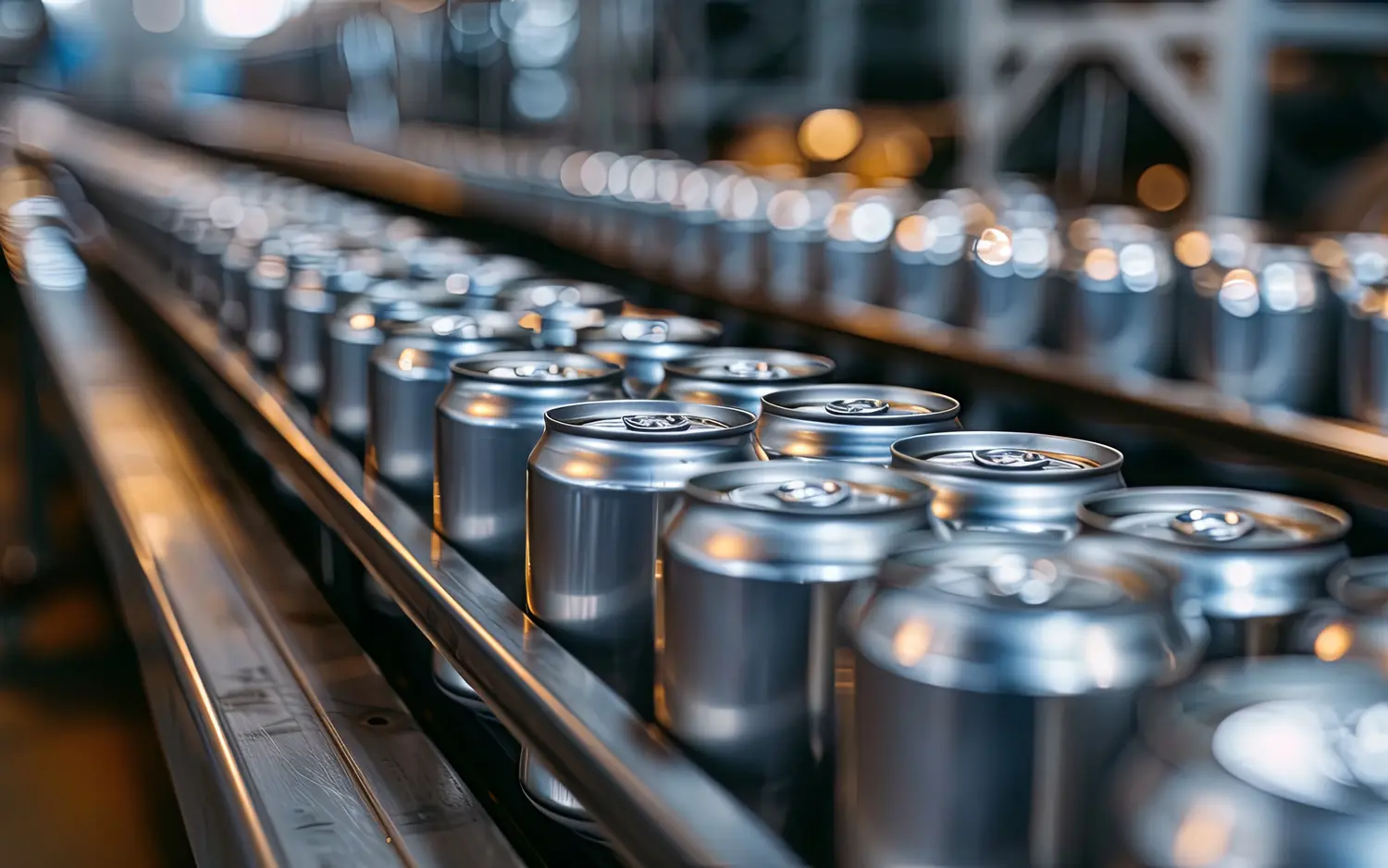
ALTEN Technology undertook an Industrial Decorator Mechanism Redesign project for a global manufacturer of aluminum packaging. The client’s challenge revolved around an existing industrial decorator that applied multi-color designs to aluminum packaging. The current process required operators to manually align individual ink patterns, which was a time-consuming and wasteful procedure, consuming over a thousand pieces…
A global manufacturer of aluminum packaging sought to modernize its industrial decorator mechanisms, which were plagued by time-consuming and wasteful manual registration adjustments. These manual processes resulted in significant machine downtime, material waste, and increased costs, particularly when changing designs or producing smaller batches. The client required a precision-controlled system that could make extremely fine adjustments while the decorator operated at high speeds, with the added capability to quickly revert to the original mechanical system if needed. ALTEN Technology was engaged to retrofit the existing mechanisms, develop a highly precise mechanical design, and create comprehensive documentation for duplication across client facilities.
ALTEN Technology adopted a structured approach, beginning with detailed requirements capture and brainstorming diverse solutions. The team meticulously addressed mechanical variances to guarantee precision and worked closely with the client’s third-party controls contractor to ensure seamless integration. Despite initial challenges with motor selection and integration, ALTEN Technology pivoted to an alternative, more intricate design, implementing advanced mechanical techniques such as press-fits and thermal expansion fits to achieve pinpoint precision. They also established clear communication channels and responsibility matrices with the controls contractor to manage the project efficiently. The outcome was a fully functional prototype and design package for a computer-controlled system that operates at speeds up to 2,200 rpm, allowing for extremely fine, on-the-fly registration adjustments. This innovative solution eliminated an estimated 5-10% of machine downtime, significantly reduced waste, potentially saving the client millions annually, and lowered costs for smaller production runs, thereby enabling market expansion and customized product offerings. The system also retained the crucial ability to revert to a purely mechanically driven system in under half an hour.